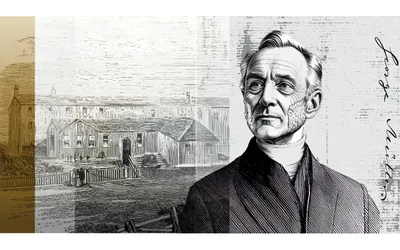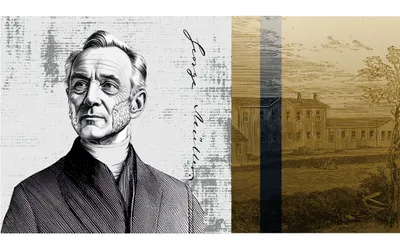


This sermon is by George Müller of Bristol, given in March 1881. May it excite your heart to watch and wait for our coming King.
“Men of Galilee, why do you stand here looking into the sky? This same Jesus, who has been taken from you into heaven, will come back in the same way you have seen him go into heaven.” (Acts 1:11, NIV)
In the days of the apostles, the disciples were comforted and encouraged by the prospect of the personal return of the Lord Jesus Christ. An angel had said to them as they watched the Lord depart from the earth, “Men of Galilee, why do you stand here looking into the sky? This same Jesus, who has been taken from you into heaven, will come back in the same way you have seen him go into heaven.” This, and not death, was the hope of the Church. And it ought to have remained up to His actual return. His coming should have continued to be the hope of the Church, but, alas, this has not been the case for centuries.
In confessions of faith, the truth that the Lord Jesus will come again may still have a place; but by far to the greater number of His disciples, it has become a mere doctrinal statement that has not been enjoyed, and has had no influence in their lives. The Lord, however, desired it should be otherwise. He intended that His Church should look for Him; that she should watch and wait for His return. Again and again, during His personal ministry, the Lord Jesus foretold this great event, and after His ascension, the apostles referred continually to it.
Very many passages of Scripture might be quoted in proof of this assertion, but I will only mention the following:
“When the Son of Man comes in his glory, and all the angels with him, he will sit on his glorious throne.” (Matthew 25:31, NIV)
“My Father’s house has many rooms; if that were not so, would I have told you that I am going there to prepare a place for you? And if I go and prepare a place for you, I will come back and take you to be with me that you also may be where I am.” (John 14:2-3, NIV)
Just as people are destined to die once, and after that to face judgment, so Christ was sacrificed once to take away the sins of many; and he will appear a second time, not to bear sin, but to bring salvation to those who are waiting for him. (Hebrews 9:27-28, NIV)
For the Lord himself will come down from heaven, with a loud command, with the voice of the archangel and with the trumpet call of God, and the dead in Christ will rise first. After that, we who are still alive and are left will be caught up together with them in the clouds to meet the Lord in the air. And so we will be with the Lord forever. (1 Thessalonians 4:16-17, NIV)
These quotations sufficiently prove that the second coming of the Lord Jesus means that He will return in person. It doesn’t refer to the gift of the Holy Spirit on the day of Pentecost, nor to His revealing Himself in a special way to the believer in the way of comfort, instruction, or help of any kind, nor does it refer to our death, when we, as believers, are taken to be with Him. If, however, anyone should say, “Why make such a big deal about this? Isn’t our going to Him when we die the same thing?” My reply is, “There is a vast difference between these two events.”
First, as individuals, we shall at the time of death be brought only to a state of partial happiness; we won’t have glorified bodies yet, but must await the hour when “in a flash, in the twinkling of an eye, at the last trumpet. For the trumpet will sound, the dead will be raised imperishable, and we will be changed” (1 Corinthians 15:42, NIV). Nor when we fall asleep do we reign with Christ and sit with Him upon His throne, because He will not then be manifestly reigning. Blessed therefore though it is for the child of God, when he departs, “to be away from the body and at home with the Lord” (2 Corinthians 5:8, NIV), it will be unspeakably more blessed still to enter upon that fullness of glory which is only at our Lord’s return.
Second, Satan will not be bound until Jesus comes again, and for this reason, by the permission of God, he still has power here, both in the world and in the Church, though individuals are out of his reach who have fallen asleep in Jesus.
Third, the whole Church will at once be introduced to full eternal happiness and glory at our blessed Lord’s return. Not only as individuals will our cup of joy be full to overflowing, but we shall rejoice throughout eternity with the whole company of the redeemed. I trust what has been said, therefore, is enough to show that the second coming of Christ will be His personal return, and that there is a vast difference between the death of individual believers and the coming return of our Lord in glory. Let’s now consider some of the events that will take place then.
The first resurrection, the changed and risen saints together, will be caught up to meet the Lord in the air, to be forever with Him. At this time, only those who are believers in the Messiah under the Old Covenant or as disciples of the Lord Jesus under the New Covenant who have fallen asleep shall be raised.
The commonly received opinion is that at our Lord’s return, there will be a general resurrection, both of believers and of unbelievers, but the Holy Spirit teaches in the Holy Scriptures that they who are Christ’s and they only will have part in the first resurrection. In 1 Corinthians 15:22-23 (NIV), we read: “For as in Adam all die, so in Christ all will be made alive.“ But each in turn: Christ, the firstfruits; then, when he comes, those who belong to him. Notice the words “those who belong to him.” Not all who had previously died, but those only who, through faith in Jesus, are united to Him and have fallen asleep as believers. The same truth is taught in 1 Thessalonians 4:16-17, where we read: “For the Lord himself will come down from heaven, with a loud command, with the voice of the archangel and with the trumpet call of God, and the dead in Christ will rise first. After that, we who are still alive and are left will be caught up together with them in the clouds to meet the Lord in the air. And so we will be with the Lord forever.” Notice that it says only the dead in Christ will rise first.
In Revelation 20:4-6 (NIV), we read:
I saw thrones on which were seated those who had been given authority to judge. And I saw the souls of those who had been beheaded because of their testimony about Jesus and because of the word of God. They had not worshiped the beast or its image and had not received its mark on their foreheads or their hands. They came to life and reigned with Christ a thousand years. (The rest of the dead did not come to life until the thousand years were ended.) This is the first resurrection. Blessed and holy are those who share in the first resurrection. The second death has no power over them, but they will be priests of God and of Christ and will reign with him for a thousand years.
At the beginning of this passage, when it is stated, “I saw thrones on which were seated those who had been given authority to judge,” we have to understand that it’s referring to believers in Christ who are with Him, and the armies in heaven mentioned in chapter 19:14.
Further, “the souls of those who had been slain because of the word of God and the testimony they had maintained,” spoken of in chapter 6:9 (NIV), are next seen. Regarding the whole of the passage, it is obvious that only believers are referred to, and not the ungodly, who had died previously. These ungodly ones indeed will be raised also, but at the end of the millennium, a thousand years later, so that having obtained their bodies (not glorified ones), they may be capable of enduring more abundant punishment (see Revelation 20:11-15).
Oh, how the seriousness and certainty of these future events should affect every one of us, and with what earnestness should each person who reads these words seek scripturally to settle for himself that he really belongs to Christ. By nature we are lost, ruined, and undone, deserving nothing but punishment; but we have, at the same time, to accept God’s only remedy, namely, salvation through faith in the blood and righteousness of the Lord Jesus Christ, by whom alone spiritual life, pardon, and justification can be ours (see Ephesians 2:1-9; Galatians 3:26; Acts 10:43; Romans 5:1; John 3:6, and Romans 8:6-17).
Another event is the conversion and restoration of Israel nationally (who will have returned to their own land in unbelief). In Scripture, the glory and resurrection of the Church of the firstborn ones is always connected with the time when Israel will again know the Lord (see Psalm 102:16; Jeremiah 30 and 31; Isaiah 11 and 12; and Isaiah 24-27).
Another event that will take place at the return of the Lord Jesus is that Satan will be bound.
And I saw an angel coming down out of heaven, having the key to the Abyss and holding in his hand a great chain. He seized the dragon, that ancient serpent, who is the devil, or Satan, and bound him for a thousand years. He threw him into the Abyss, and locked and sealed it over him, to keep him from deceiving the nations anymore until the thousand years were ended. After that, he must be set free for a short time. (Revelation 20:1-3, NIV)
During the present age, before the return of our Lord, Satan will not be bound; therefore, sin and open wickedness will continue up until then, and instead of becoming better, things, according to Scripture, will become worse and worse. It is impossible to shut one’s eyes to the fearful wickedness now around us everywhere! There are acts of cruel murder, countless other crimes committed even in this so-called enlightened age. All this clearly proves that Satan is not yet bound, that he is even now the god of this world, having power over it; and because he knows that his time will be comparatively short, he enacts his hatred against God and against His people all the more. But this state of things will not last forever because when Jesus comes again, Satan will lose his power over the earth and will be shut up in the bottomless pit for a thousand years.
Connected with the return of the Lord Jesus is another event, namely, the separation between the wheat and the weeds, which represents Christianity, or the professing church of Christ. Read carefully Matthew 13:24-43. In this parable, together with our Lord’s own explanation of it, we see what is to be expected during this present age. Civilization, mental cultivation, and advancement in knowledge of every kind may continue to flourish, but man—fallen man—remains a ruined creature, unless he is born again by the power of the Holy Spirit, through the acceptance of the gospel. Intellectually, he may be improved and polished to the very highest degree, but he is a sinner, and, in his natural condition, remains lost, ruined, and undone. He may even possess natural religion and a form of godliness, but if he is not born again, he is still an enemy of God, and if he does not believe in the Lord Jesus Christ, “God’s wrath remains on them” (John 3:36, NIV).
Sin is not, as some suppose, a comparatively little thing. It is a deadly spiritual disease, as the Word of God declares, and no progress in education, no mental culture, can eradicate it from the heart, nor change depraved human nature. For even with every effort at improvement, the heart remains “deceitful above all things and beyond cure” (Jeremiah 17:9, NIV). Until the return of the Lord Jesus, the present state of things will continue, and, as we shall see presently from the Word of God, will become worse and worse.
This, then, plainly shows the notion entertained by many godly, excellent persons, that the world will be converted during the present age by the preaching of the gospel, and that the Millennium will thus finally be introduced, but not according to the Holy Scriptures.
The gospel, indeed, was to be preached “as a testimony to all nations” (Matthew 24:14, NIV), but it was not to be the means of the conversion of the world. Furthermore, in Acts 15:14, we learn the nature of the present age, which is God receiving from among the Gentiles a people for His name—not converting all nations. This is confirmed by the parable of the wheat and the weeds. If the whole world were to be converted before the return of the Lord Jesus, there would be no truth in the explanation given of it by our Lord Himself. He tells us that the weeds (the children of the wicked one) are to grow together with the wheat (the children of the kingdom) until the end of the age, up to the time of His own return. Therefore, the words of the Lord Jesus are in direct opposition to the common notion that the whole world will be saved before He comes again.
And in addition to this, we find passage after passage in the New Testament where we are expressly told, either by Christ or by the apostles, that at the close of this present age, wickedness will reign both among professed believers and those still in the world at large, and to prove this, I will refer to one single passage of Scripture only:
But mark this: There will be terrible times in the last days. People will be lovers of themselves, lovers of money, boastful, proud, abusive, disobedient to their parents, ungrateful, unholy, without love, unforgiving, slanderous, without self-control, brutal, not lovers of the good, treacherous, rash, conceited, lovers of pleasure rather than lovers of God—having a form of godliness but denying its power. Have nothing to do with such people. (2 Timothy 3:1-5, NIV)
Here, we have particularly to keep in mind that this is not a description of unbelievers or Muslims, but of the professed disciples of the Lord Jesus, for to such a state will Christendom, or the professing Church of Christ, be reduced at the end of the present dispensation.
Notice especially that of these people, it is said that they have a form of godliness. They wish to be considered Christians—they are not confessed agnostics or atheists, but professed believers. Are we, then, to expect that things around us will gradually improve, or rather, that as we approach the end of the age, things will become darker? Yes, it’s true that one day, “the earth will be filled with the knowledge of the glory of the LORD as the waters cover the sea” (Habakkuk 2:14, NIV), but this won't happen until Jesus Himself returns. In the meantime, lawlessness will increase, and socialism, communism, nihilism, the list goes on, of which we now hear so much, will at last be headed up in the personal Antichrist, the man of lawlessness.
This leads me to mention another event that will take place at the return of the Lord Jesus Christ: the destruction of the Antichrist. In 2 Thessalonians 2:1-8 (NIV), we read:
Concerning the coming of our Lord Jesus Christ and our being gathered to him, we ask you, brothers and sisters, not to become easily unsettled or alarmed by the teaching allegedly from us—whether by a prophecy or by word of mouth or by letter—asserting that the day of the Lord has already come. Don’t let anyone deceive you in any way, for that day will not come until the rebellion occurs and the man of lawlessness is revealed, the man doomed to destruction. He will oppose and will exalt himself over everything that is called God or is worshiped, so that he sets himself up in God’s temple, proclaiming himself to be God.
Don’t you remember that when I was with you I used to tell you these things? And now you know what is holding him back, so that he may be revealed at the proper time. For the secret power of lawlessness is already at work; but the one who now holds it back will continue to do so till he is taken out of the way. And then the lawless one will be revealed, whom the Lord Jesus will overthrow with the breath of his mouth and destroy by the splendor of his coming.
In verse 3 of the inspired Word of God, we learn that the Lord Jesus will not come until after “the man of lawlessness is revealed.” Has the apostasy here spoken of taken place, and has the lawless one (or, the Antichrist) been revealed? The reply from Scripture is that the apostasy has not yet taken place, and the lawless one has not yet been revealed. This passage has not found its fulfillment either in the papacy or the popes. Fearful as the delusions of the papacy are, and awful as is the picture of what the popes have been, the apostasy referred to here will be far more dreadful still, for it will be no less than an entire renunciation of all that is divine, the lawless one exalting himself to be as God: “He sets himself up in God’s temple, proclaiming himself to be God.”
He will be a king, a mighty monarch, whose might is obtained through the energy given to him by Satan, for “the dragon gave [him] his power and his throne and great authority” (Revelation 13:2, NIV). This king, the Antichrist, will be at the head of the ten kingdoms of the Roman world (that is, the territories that once made up the ancient Roman Empire, which will one day be divided into ten kingdoms), and the ten kings will agree to give him their power. During the period of his extraordinary fame, which will only last forty-two months, he will blaspheme God, His tabernacle, and those who dwell in heaven. And he will be “given power to wage war against God’s holy people and to conquer them. And it was given authority over every tribe, people, language and nation. All inhabitants of the earth will worship the beast—all whose names have not been written in the Lamb’s book of life, the Lamb who was slain from the creation of the world” (Revelation 13:5-8).
This, then, and not the world’s conversion, is the state of things that we are rapidly moving toward. Do we all really believe what the Scriptures declare concerning the things that are coming upon the earth, that the time is speeding on when no one can “buy or sell unless they had the mark, which is the name of the beast or the number of its name” (Revelation 13:17, NIV)? When those who don’t submit to this and worship him must be prepared to lose their life? The end, however, of this lawless one is plainly foretold in Scripture, “The Lord Jesus will overthrow with the breath of his mouth and destroy by the splendor of his coming” (2 Thessalonians 2:8, NIV).
We now have to consider that it’s the Lord’s will that we, His disciples, wait for His return. A great many passages might be quoted from the New Testament to back this up, but for the sake of brevity, I will refer only to a few. In Titus 2:11-13 (NIV), we read, “For the grace of God has appeared that offers salvation to all people. It teaches us to say “No” to ungodliness and worldly passions, and to live self-controlled, upright and godly lives in this present age, while we wait for the blessed hope—the appearing of the glory of our great God and Savior, Jesus Christ.” See how it is a command for the saints to look for the blissful hope and appearing of the glory of the great God and our Savior Jesus Christ.
In Matthew 24:36-41, our Lord Himself encourages His disciples to wait for His return, and to watch. In Matthew 25:13 (NIV), the Lord said to His disciples, "Therefore keep watch, because you do not know the day or the hour [the Son of Man comes].” Again in Mark 13:35-37 (NIV), Jesus says, "Therefore keep watch because you do not know when the owner of the house will come back—whether in the evening, or at midnight, or when the rooster crows, or at dawn. If he comes suddenly, do not let him find you sleeping. What I say to you, I say to everyone: ‘Watch!’” Again, in Revelation 16:15 (NIV), the Lord says, "Look, I come like a thief! Blessed is the one who stays awake and remains clothed, so as not to go naked and be shamefully exposed."
Now, are we as believers all watching? Are we earnestly longing for the return of that blessed One? Do our hearts truly yearn after Him, longing for His glorious appearing? Are we also doing our part to hasten His coming? And is it commonly our prayer that the Lord would bring to pass the fulfillment of the events yet to happen before that day comes?
And now the last part of our topic remains to be considered, namely, the practical effect this truth should have on our hearts. If we have really understood and received this hope, the child of God will ask, “What can I do for my blessed Savior before He comes again? How can I most glorify Him? His will for me is that I should work faithfully until His return. How can I best use my talents for Him, which He entrusted to me—my strength, my mind, my abilities? How can my eyes, my voice, and every part of me be devoted to His praise? How should my time, my money, all that I am and have be used for Him? How can my whole spirit, soul, and body be best consecrated to His service?”
These are deeply important practical questions which all believers in the Lord Jesus should ask themselves, seeing that we are not our own, but are bought with a price with His precious blood. Instead of indulging in inactivity and idleness on account of the evil state of things around us, we should pray and work, and work and pray, as if it were in our power to stem the torrent of growing iniquity. Who can say how much good one single child of God who is thoroughly sincere may accomplish, and how greatly he may glorify God by walking in entire separation from all that is hateful to Him? We especially have to guard against the temptation of slackening our efforts for the conversion of sinners, since the world will not be converted before Jesus comes. Rather, should we say, “The time of His coming may be soon! What can I do to warn sinners, and to win souls for Him?”
When it pleased God in July 1829, to reveal to my heart the truth of the personal return of the Lord Jesus, and to show me that I had made a great mistake in looking for the conversion of the world, the effect it produced on me was this: Deep in my soul I was stirred up to feel compassion for the perishing sinners, and for the slumbering world around me under control of the wicked one, and I considered, “Should I not do what I can to win souls for the Lord Jesus, and to wake a slumbering church?” I determined consequently to go from place to place, to preach the gospel and wake the Church to look and wait for the second coming of the Lord from heaven.
I soon began this work, but in a short time saw it plainly to be the Lord’s will that I should stay for a while at Teignmouth, Devonshire, in a pastoral position, and labor in Bristol in the same way. Though I have now been a pastor for more than fifty-one years, my heart has always been true to these two points. Through the Lord allowing me to establish “The Scriptural Knowledge Institution for Home and Abroad,” I have for forty-seven years been aiming at the conversion of sinners, and have sought to awaken the Church of Christ at large to look for His appearing as her great hope.
Besides this, during the last six years, from March 1875 to March 1881, I have almost constantly been traveling about (having visited eleven different countries and preached about 1800 times), in order to preach the gospel, to stir up and instruct Christians about the character of this present age, and approaching end.
In conclusion, I would direct your attention to 2 Peter 3:11-14 (NIV):
Since everything will be destroyed in this way, what kind of people ought you to be? You ought to live holy and godly lives as you look forward to the day of God and speed its coming. That day will bring about the destruction of the heavens by fire, and the elements will melt in the heat. But in keeping with his promise we are looking forward to a new heaven and a new earth, where righteousness dwells.
So then, dear friends, since you are looking forward to this, make every effort to be found spotless, blameless and at peace with him.
As assuredly as the power of the Lord’s second coming is really comprehended, the most blessed effects upon the life and attitude of Christians will follow. By means of it, we are taught what awaits the world lying in control of the wicked one, and what will be the end of all this world’s glory, pride and extravagance. The future destiny of the children of God is also revealed: We will be perfectly conformed to the image of our risen Lord, in both soul and body, when we see Him as He truly is.
Then we will receive our inheritance, which is incorruptible, undefiled, unfading. We will be seated with Jesus on His throne (see Revelation 3:21), to judge the world alongside Him, and we will spend a happy eternity together with our Lord in glory through the promise of Revelation 22:12 (NIV): “Look, I am coming soon! My reward is with me, and I will give to each person according to what they have done.”
Let’s end with a hymn by Gerhard Tersteegen entitled “Midst the Darkness, Storm and Sorrow”:
Midst the darkness, storm, and sorrow,
One bright gleam I see:
Well I know the blessed morrow
Christ will come for me.
‘Midst the light and peace and glory
Of the father’s home,
Christ for me is watching, waiting –
Waiting till I come.Oh, the blessed joy of meeting,
All the desert past!
Oh, the wondrous words of greeting
He shall speak at last!
He and I together entering
Those bright courts above:
He and I together sharing
All the Father’s love.He who in His hour of sorrow
Bore the curse alone:
I who through the lonely desert
Trod where He had gone:
He and I in that bright glory,
one deep joy shall share:
Mine, to be for ever with Him:
His, that I am there.1
Gerhard Tersteegen, “Midst the Darkness, Storm and Sorrow,” c. 1729, stanzas 1, 4, 5.








.png) George Müller
George Müller